Table of Contents
Some fantasies are less about pain, ropes, or dramatic roleplay than people assume.More often, what makes kink feel electrifying is the shift in control.One person leads. One person follows. One person decides when pleasure starts, pauses, or builds. That transfer of authority—however subtle—is the core of Dominance and Submission, and it’s the reason even simple touch can feel far more charged than ordinary sex.
This also explains why so many curious couples are exploring D/s today without diving straight into intimidating BDSM gear. Modern power exchange—especially in Femdom (female dominance) dynamics—often begins with low-pressure control, guided teasing, and wearable technology that makes surrender feel easier, quieter, and far more believable.
If you’ve been wondering why Dominance and Submission creates such a strong psychological pull—or how to try it without forcing yourselves into a full dungeon fantasy—this guide breaks down what actually works.
What Is Dominance and Submission in BDSM?
Dominance and Submission is a consensual power exchange where one partner temporarily takes a controlling or guiding role, while the other willingly gives up a measure of control within clearly discussed limits.
That definition sounds straightforward, but its erotic impact goes much deeper than “one person is in charge.”
At its best, Dominance and Submission changes the emotional atmosphere of sex. It creates structure. It adds anticipation. It turns waiting into foreplay and permission into stimulation.
Instead of both partners moving instinctively through familiar patterns, the scene now has hierarchy:
someone gives direction,
someone receives it,
and every delay or reward carries more meaning because control is no longer shared equally.
This is why many sex educators describe D/s as the psychological framework underneath BDSM rather than just another kink category. According to the National Coalition for Sexual Freedom, consensual power exchange relies on explicit negotiation, mutual boundaries, and ongoing communication—not coercion or assumed compliance.
That distinction matters because Dominance and Submission is often misunderstood as something aggressive, when in reality its intensity usually comes from consent-driven contrast: choosing when not to choose.
Why Dominance and Submission Feels More Powerful Than People Expect
Dominance and Submission affects arousal because it changes how the body experiences uncertainty.
When one partner does not fully control timing, stimulation, or climax, the nervous system becomes more alert. Small pauses feel longer. Teasing feels sharper. Instructions feel heavier than casual requests.
In other words, sensation becomes psychological before it becomes physical.
This is one reason D/s often feels disproportionately intense even when the actions themselves are relatively mild. A hand held still on command can create more tension than rougher contact in a neutral scene, because the submissive is no longer responding freely—they are waiting, anticipating, and mentally tracking approval.
Several sexuality educators, including professionals associated with AASECT, note that anticipation and negotiated control frequently heighten erotic focus by narrowing attention onto the immediate interaction.
That narrowing is the hidden accelerator.
People are not simply feeling touch.
They are feeling controlled access to touch.
And that changes everything.

How Dominance and Submission Works Without Extreme BDSM Equipment
One of the biggest beginner misconceptions is assuming Dominance and Submission only “counts” if it looks visually dramatic.
It doesn’t.
In practice, many highly effective D/s scenes are surprisingly minimal. The transfer of control can happen through:
- permission before touching,
- verbal commands,
- delayed orgasm rules,
- movement restrictions,
- timed teasing,
- app-guided stimulation,
- response-based rewards.
Notice that none of these require a dungeon setup.
That is because Dominance and Submission is primarily about who controls pace and release, not about collecting props.
This shift has made D/s much more approachable for modern couples, especially those who feel curious about kink but are not interested in pain-heavy play or complicated bondage rituals. Instead of acting out an exaggerated BDSM fantasy, they can build authority through simpler but psychologically convincing mechanisms.
- A pause.
- A denied climax.
- A vibration triggered remotely.
- A command to stay still.
These are smaller moments, but they create believable submission because the submissive feels their pleasure becoming externally managed.
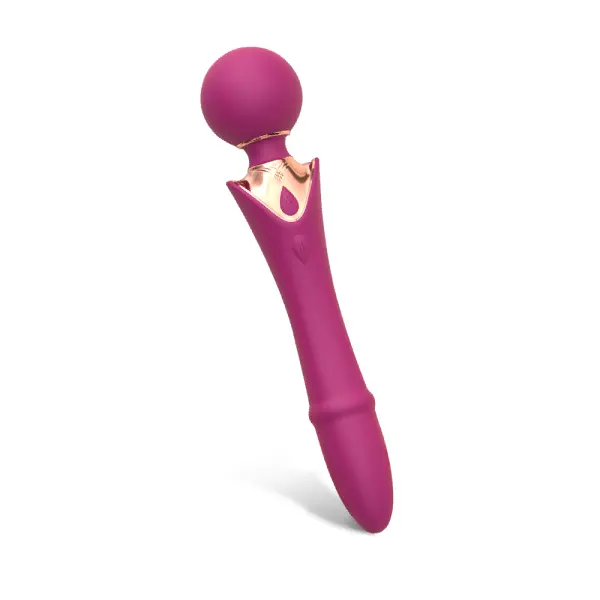
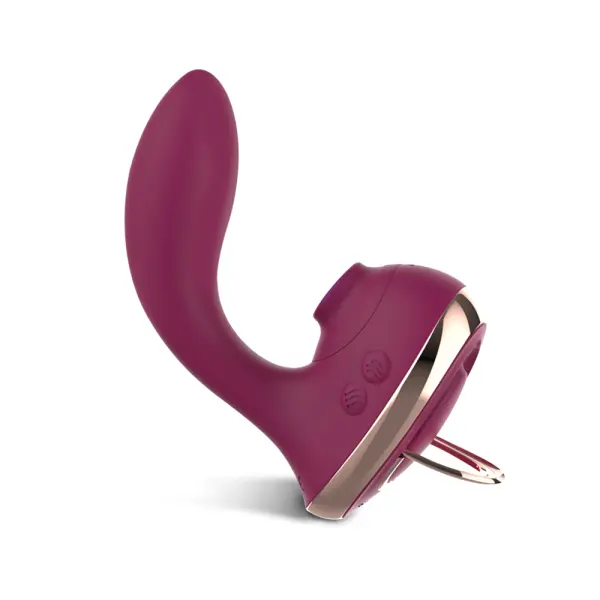
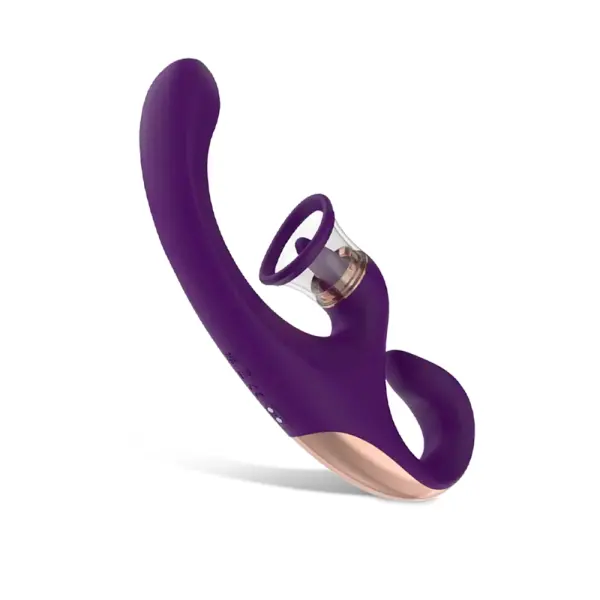
How Modern Couples Use Wearable Toys to Deepen Dominance and Submission
This is where contemporary D/s has changed significantly.
Traditional BDSM often relied on visible restraints to symbolize control. Today, many couples create the same authority dynamic through discreet wearable stimulation that lets the Dominant manage sensation directly.
A remote wearable toy turns control into something continuous:
the submissive does not just hear commands—they physically feel when control is given, withheld, intensified, or interrupted.
That makes Dominance and Submission easier to sustain because authority becomes sensory instead of purely verbal.
For beginners especially, this solves a common problem: roleplay can feel awkward when both people are self-conscious. But when stimulation is externally controlled through a wearable device, the scene gains instant credibility. The submissive naturally reacts. The Dominant naturally directs. Less acting is required.
This is one reason low-pressure wearable control has become a preferred entry point for couples who want D/s to feel immersive without relying on harsher BDSM imagery.
A well-designed remote toy can create:
- orgasm denial,
- surprise teasing,
- permission-based release,
- public discreet control,
- obedience tasks tied to stimulation.
In each case, Dominance and Submission becomes easier because the power exchange is no longer abstract.
It is embodied.
Why Delayed Pleasure Makes Dominance and Submission So Addictive
Dominance and Submission is rarely about constant stimulation.
It is usually about interrupted stimulation.
The Dominant decides when sensation starts, how long it lasts, and whether completion is allowed. This controlled inconsistency creates one of the strongest erotic loops in D/s: wanting relief while knowing relief is conditional.
That tension produces a psychological layering effect:
arousal rises,
frustration rises with it,
obedience becomes more emotionally charged,
and eventual reward feels earned rather than automatic.
This is why delayed pleasure scenes tend to stay memorable.
The submissive is not simply turned on—they are held in a state of managed need.
Wearable remote stimulation works particularly well here because it allows tiny, precise shifts in intensity without breaking the mood. A short pulse can function as correction. A longer pulse can function as reward. Silence can function as denial.
The scene keeps moving, but control remains unmistakably external.
For couples exploring Dominance and Submission for the first time, this often feels more natural than trying to invent strict verbal scripts from scratch.

Is Dominance and Submission More About Psychology Than Physical Force?
Yes—and this is where many people begin to understand why D/s can feel intimate rather than theatrical.
Physical force may appear dramatic, but Dominance and Submission becomes sustainable when psychological trust does most of the work.
The submissive has to believe:
- my reactions are being noticed
- my pleasure is being monitored
- I do not control the pace right now.
The Dominant has to believe:
- I am holding the scene
- I am guiding the rhythm
- I am responsible for escalation.
Once both partners inhabit those roles, even gentle interaction can feel commanding.
That is why successful D/s often looks calmer than beginners expect. It is less frantic than porn suggests. More pauses. More observation. More measured control.
The strongest scenes usually are not the loudest ones.
They are the ones where every sensation feels intentionally timed.
Common Mistakes That Make Dominance and Submission Feel Forced
Dominance and Submission often disappoints when couples chase the image of kink instead of the mechanics of control.
Several patterns cause this repeatedly.
Trying to sound “dominant” instead of creating real authority
Random commands without consequence or sensory follow-through tend to feel performative.
Moving too quickly into intense punishment
If the submissive has not yet learned to enjoy controlled anticipation, harsher escalation often feels disconnected.
Assuming submission means silence
In reality, responsive communication keeps D/s believable and safe.
Forgetting that control needs reinforcement
This is where many scenes collapse: words alone are not always enough to maintain immersion. When there is no physical marker of delayed reward, denied release, or externally managed sensation, the dynamic can start to feel like improvised dirty talk rather than true Dominance and Submission.
This is exactly why many couples eventually look for more tactile forms of guided control once they understand the psychological appeal.
Not because they need “more extreme BDSM,” but because believable authority is easier to maintain when sensation can be regulated in real time.
How to Start Exploring Dominance and Submission as a Beginner
The best beginner D/s scenes usually start smaller than expected.
Rather than planning an elaborate script, begin with one controllable variable:
- touch
- timing
- orgasm
For example, the Dominant may decide:
- when the submissive is allowed to move
- when stimulation begins
- when it stops
- whether climax is postponed.
That alone creates enough hierarchy to test chemistry.
If both partners respond well, wearable remote stimulation can deepen the dynamic naturally because it gives the Dominant a direct tool for pacing reward and denial without interrupting the scene every few seconds.
This keeps the power exchange flowing rather than forcing constant verbal explanation.
For many couples, that lower-friction structure makes Dominance and Submission feel less like “trying to act kinky” and more like slipping into a rhythm that becomes believable on its own.

Why Dominance and Submission Can Improve Long-Term Sexual Curiosity
Many bedroom routines lose intensity because both partners know exactly how pleasure will unfold.
Dominance and Submission reintroduces unpredictability.
Not unpredictability in the unsafe sense, but in the controlled sense: timing is no longer guaranteed, responses matter more, and one partner’s authority changes the emotional rhythm each time.
This keeps ordinary stimulation from feeling automatic.
Even familiar touch becomes newly charged when access is conditional.
Couples also tend to find that D/s scenes generate more conversation afterward—what felt exciting, what kind of denial worked, what kind of control felt too mild or too strong. That feedback loop gradually personalizes the dynamic, which is why Dominance and Submission often evolves rather than fading after one novelty attempt.
And because tech-assisted wearable control can be adjusted so precisely, it allows couples to keep experimenting without needing to reinvent the entire scene each time.
Final Thoughts on Dominance and Submission
Dominance and Submission is far less about looking intimidating than it is about making control feel real.
When one partner can meaningfully regulate access to pleasure, delay gratification, and shape anticipation, even simple scenes become charged with authority and surrender. That is the true psychological center of D/s—not the props people imagine first, but the believable management of sensation and choice.
For modern couples, this also means kink no longer has to begin with elaborate BDSM equipment. Smaller forms of guided control, especially those supported by wearable stimulation, often create a smoother and more convincing introduction to power exchange.
As with any intimate experimentation, comfort levels, emotional history, and communication styles differ from one relationship to another. Moving gradually, checking in honestly, and consulting qualified sexuality professionals when needed will always produce better outcomes than copying someone else’s fantasy wholesale.
No. Many D/s scenes rely entirely on controlled teasing, orgasm delay, verbal commands, or wearable stimulation without involving pain at all.
They can, because they give the Dominant direct control over sensation, pacing, and denial. That makes the authority dynamic feel more tangible.
Start with permission-based touch or delayed climax rules. Once that feels comfortable, externally controlled stimulation can deepen the experience without making the scene overly complicated.
Yes. In fact, shy couples often do better with low-verbal, sensation-led control because it reduces the pressure to “perform” traditional BDSM roles.
-
 Quick View
 -
Quick View
-
Quick View
-
Quick View