Table of Contents
There comes a point in many relationships where routine starts replacing anticipation. What once felt exciting slowly becomes predictable, even when the connection itself is still strong. Research published in the Journal of Sex & Marital Therapy found that many couples report boredom caused by repetitive sexual routines, which often leads partners to explore new forms of intimacy and stimulation.That’s one reason the anvil sex position continues gaining attention. Unlike more passive positions, the Anvil combines deep penetration, full-body closeness, and controlled movement in a way that feels physically intense while still emotionally connected.
For couples looking to experiment with deeper angles, stronger eye contact, and more deliberate rhythm, this position offers far more than novelty. It creates a setup where communication, pacing, and body alignment all play a meaningful role in pleasure.
What Is the Anvil Sex Position?
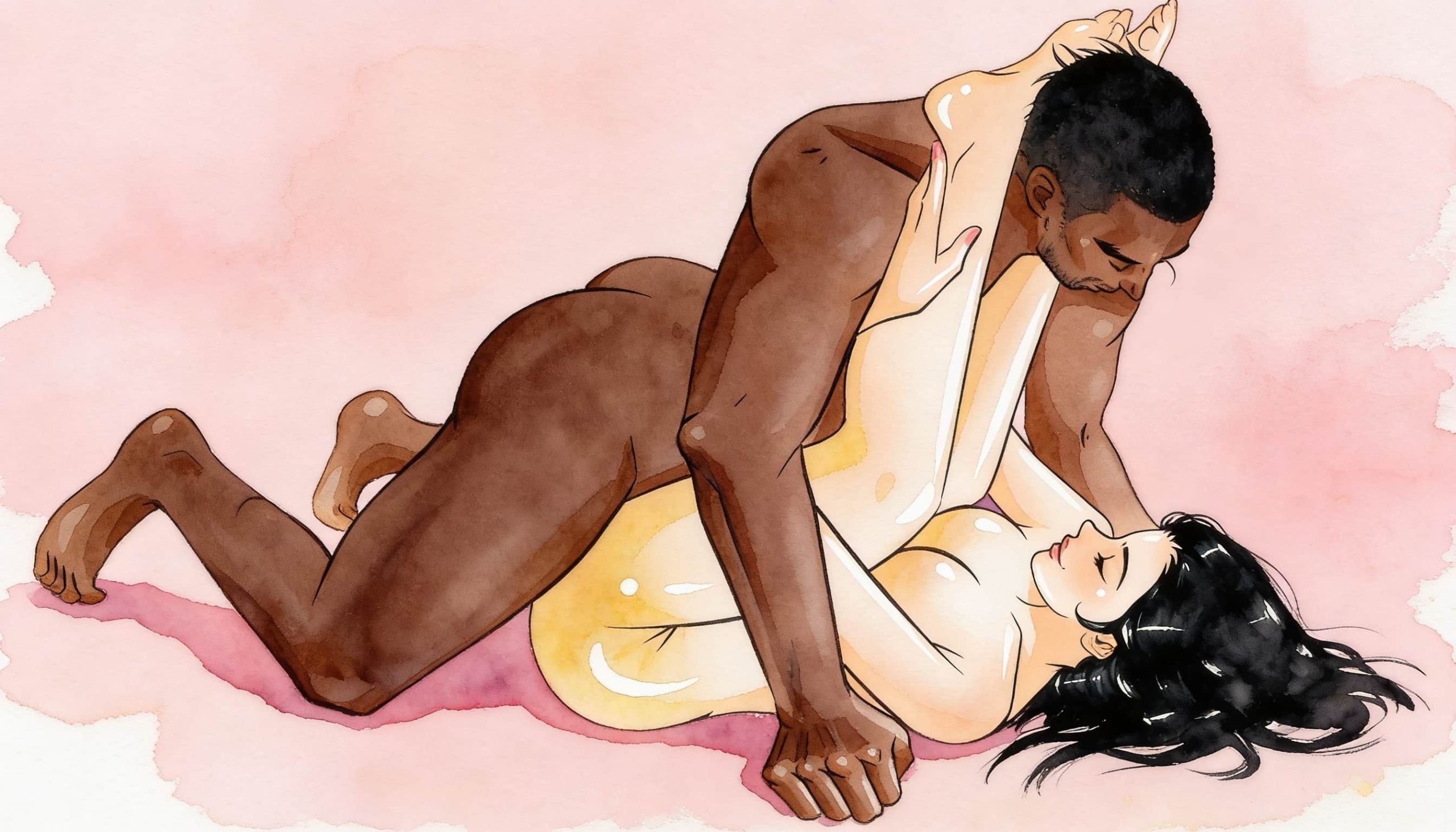
The anvil sex position is a deep-angle variation of missionary where one partner lies on their back while lifting their legs over the penetrating partner’s shoulders. This positioning changes pelvic alignment and creates a straighter angle of penetration, often increasing pressure against sensitive internal areas like the G-spot.
Unlike standard missionary, the Anvil naturally limits unnecessary movement and encourages slower, more controlled thrusting. That combination is exactly why many couples describe it as both intense and emotionally grounding.
The position also increases skin contact and eye contact, which may strengthen feelings of closeness during sex. According to relationship researchers, physical synchronization during intimacy can increase emotional bonding through oxytocin release and mutual responsiveness.
However, depth alone does not automatically create pleasure. The success of the Anvil usually depends on pacing, flexibility, and communication rather than force or speed.
For a complete guide to intimacy, pleasure, comfort, and adventurous ideas, explore our full Best Sex Positions Guide for every couple and mood.
Why Does the Anvil Sex Position Feel So Intense?
The intensity comes primarily from body angle and reduced space between partners. When the receiving partner’s hips tilt upward, penetration becomes more direct and concentrated.
Several physical factors contribute to this sensation:
Deeper Internal Contact
Because the pelvis is elevated, thrusts often reach farther inside the vaginal canal compared to flatter positions. Many women report stronger G-spot stimulation from this angle, while others notice increased fullness and pressure.
Greater Pelvic Stability
The legs-over-shoulders position stabilizes the hips, which reduces shifting during movement. This allows for more consistent stimulation instead of constantly changing contact points.
Stronger Sensory Awareness
The Anvil naturally creates chest-to-chest proximity. That closeness increases awareness of breathing, facial expressions, body tension, and rhythm changes, all of which contribute to arousal.
More Controlled Movement
Unlike faster positions that rely on momentum, the Anvil tends to favor deliberate thrusting. Slower movement often increases sensitivity because the body has more time to process pressure and friction.
How to Perform the Anvil Sex Position Comfortably
The anvil sex position works best when both partners prioritize alignment over flexibility. Many people assume deeper positions require athletic movement, but comfort usually matters far more than range of motion.
Starting Position
The receiving partner lies on their back while gradually lifting their legs upward. The penetrating partner positions themselves between the legs and gently supports the hips or thighs.
The legs can rest against the shoulders without forcing them tightly backward. Small bends in the knees usually reduce strain on the lower back and hips.
Focus on Pelvic Angle First
Instead of pushing deeper immediately, focus on adjusting the pelvic tilt. Even slight hip elevation can dramatically change sensation without requiring extreme flexibility.
Placing a pillow beneath the hips often helps maintain alignment naturally.
Slow Entry Matters More Here
Because penetration may feel deeper than expected, entering slowly gives muscles time to relax. Sudden thrusting can create discomfort rather than pleasure, especially during the first few minutes.
Couples who communicate continuously during setup generally report a better experience than those who rush into full depth too quickly.
Support the Lower Body
Holding the hips or thighs helps maintain balance and reduces unnecessary tension. Without support, the receiving partner may instinctively tighten muscles, which can make the position less enjoyable.
What Areas Does the Anvil Sex Position Stimulate?
The anvil sex position changes internal pressure patterns because of its upward pelvic angle. While anatomy differs from person to person, several areas are commonly discussed in sexual health research and personal experience.
G-Spot Stimulation
The upward angle often creates repeated pressure against the anterior vaginal wall, where many women describe heightened sensitivity.
A-Spot Contact
Some couples report deeper sensations associated with the anterior fornix area, sometimes called the A-spot. Slower thrusting typically works better here than aggressive movement.
External Clitoral Friction
Although the position focuses heavily on penetration depth, pelvic closeness can still create external stimulation depending on body positioning and rhythm.
Cervical Pressure
For some women, gentle cervical contact feels pleasurable and emotionally intense. For others, it may feel uncomfortable. This is highly individual, which is why communication matters throughout the experience.
How Can You Make the Anvil Sex Position More Comfortable?
Comfort adjustments often determine whether the Anvil feels pleasurable or overwhelming. Small modifications usually improve endurance, reduce tension, and create more enjoyable movement.
Use Pillows Strategically
A pillow beneath the hips can reduce lower back pressure while improving angle control. This often prevents excessive strain during longer sessions.
Don’t Force Full Flexibility
Many couples mistakenly believe the legs must be pushed extremely far back. In reality, moderate positioning often feels better because muscles remain relaxed.
Control Depth With Rhythm
Deep penetration does not require constant maximum thrusting. Alternating shallow and deeper movement creates more variation and usually feels more sustainable.
Pay Attention to Breathing
Breathing patterns affect muscle tension significantly. Slow breathing helps the pelvic floor relax naturally, which may improve comfort and sensitivity.
Anvil Sex Position Variations That Feel Completely Different
One reason this position stays popular is its adaptability. Small changes in leg placement or posture create entirely different sensations.
Oyster Position Variation

The Oyster variation pulls the legs closer toward the chest, creating a tighter angle and increased internal pressure.
This version often feels more compressed and intimate than the traditional Anvil. Couples who enjoy deep, controlled thrusting usually prefer this variation because it intensifies fullness without requiring faster movement.
Deep Stick Variation

The Deep Stick shifts the penetrating partner into a more upright kneeling posture. This creates a near-vertical angle that increases precision and depth control.
Many couples like this version because it balances emotional closeness with stronger thrust mechanics.
Eagle Variation

The Eagle opens the legs wider rather than lifting them tightly upward. That adjustment creates a more relaxed feeling while still maintaining relatively deep penetration.
For couples who enjoy openness and freedom of movement, this variation often feels less restrictive than the classic Anvil.
Why the Anvil Sex Position Works Well for Emotional Intimacy
Many deep positions prioritize physical intensity but unintentionally reduce emotional interaction. The Anvil tends to do the opposite.
Because partners remain physically close throughout the experience, the position encourages:
- Continuous eye contact
- Easier communication
- Shared breathing rhythm
- More physical reassurance
- Slower, synchronized movement
Research around partner synchronization suggests these factors may strengthen emotional connection during intimacy. In long-term relationships especially, emotional engagement often influences satisfaction just as much as physical stimulation.
That’s partly why some couples describe the Anvil as emotionally immersive rather than simply “rough” or “intense.”
Can Sex Toys Improve the Anvil Sex Position?
For many couples, toys enhance stimulation without changing the position itself. The key is choosing accessories that complement closeness rather than interrupt rhythm.
Wearable Couples Vibrators
Hands-free wearable vibrators can increase external stimulation while allowing both partners to maintain body contact and movement flow.
Small External Vibrators
Compact vibrators aimed toward the clitoris may increase blended stimulation during slower thrusting patterns.
Lubrication Matters More Than People Realize
Because the Anvil often involves deeper penetration, lubrication becomes especially important for comfort. Water-based lubricants typically work well with most toy materials and condoms.
Common Mistakes Couples Make With the Anvil Sex Position
The biggest problems usually come from trying to make the position look more extreme than it needs to be.
Moving Too Fast Too Early
Depth increases sensitivity quickly. Starting aggressively often creates tension instead of arousal.
Ignoring Hip Support
Without proper support, the receiving partner may feel strain in the lower back or hamstrings after only a few minutes.
Treating Flexibility Like a Goal
The Anvil is about angle, not performance. Comfortable positioning almost always feels better than pushing flexibility limits.
Forgetting Communication
Because sensations can intensify rapidly, regular check-ins help maintain comfort and trust.
Who Usually Enjoys the Anvil Sex Position Most?
The anvil sex position tends to work best for couples who enjoy slower intensity rather than chaotic movement.
It may especially appeal to:
- Couples exploring deeper penetration
- Partners who value emotional closeness during sex
- People interested in controlled rhythm
- Couples experimenting with angle-based stimulation
- Long-term partners looking to break routine thoughtfully
At the same time, flexibility limitations, lower back pain, or discomfort with deep penetration may require modifications.
Final Thoughts on the Anvil Sex Position
The anvil sex position is not simply about depth. What makes it memorable for many couples is the combination of closeness, control, and focused stimulation.
When approached patiently, the position can create a balance between emotional intimacy and physical intensity that many standard positions struggle to deliver. Small adjustments in angle, rhythm, and support often make the biggest difference, especially for couples exploring deeper forms of connection rather than chasing novelty alone.
Like any intimate experience, communication matters more than performance. Every body responds differently to pressure, penetration depth, and pacing, so adapting the position together usually leads to a far better experience than trying to force a perfect version of it.
If pain, discomfort, or pelvic issues occur regularly during intercourse, speaking with a qualified sexual health professional or medical provider can help identify safer and more comfortable approaches for your body.
If you enjoy depth and immersion, you might want to try Fursuit Sexual and take role-playing to the extreme.
It can be, but beginners usually benefit from slower pacing and moderate leg positioning first. Using pillows and avoiding excessive depth helps make the experience more comfortable.
The elevated hip angle changes the direction of penetration, allowing more direct internal contact. Even slower thrusts may feel significantly more intense.
Yes, especially if flexibility is forced or penetration becomes too aggressive. Proper support, communication, and controlled movement usually prevent discomfort.
-
 Quick View
 -
Quick View
-
Quick View
-
Quick View